

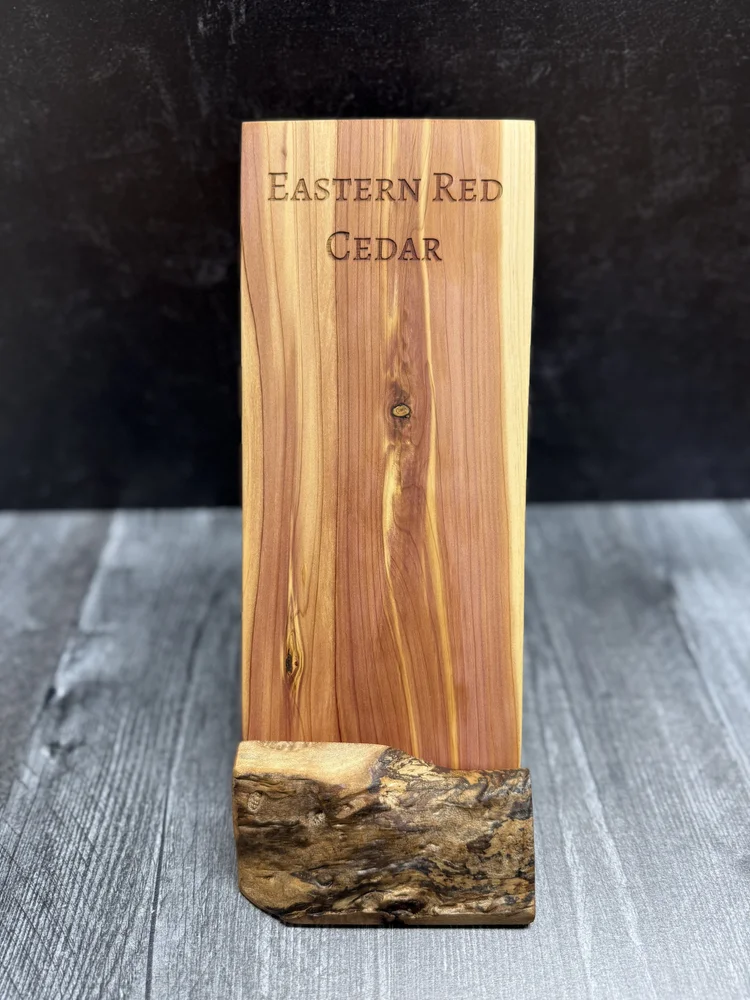
Eastern Red Cedar
Stability, durability, and the smell. No other softwood has all three.
Juniperus virginiana The most widely distributed conifer of tree size in the eastern United States; native from Nova Scotia west to Ontario and the Dakotas
The most widely distributed conifer of tree size in the eastern United States; native from Nova Scotia west to Ontario and the Dakotas.
A juniper, technically. Heartwood is a vibrant reddish purple to violet-brown fresh off the saw.
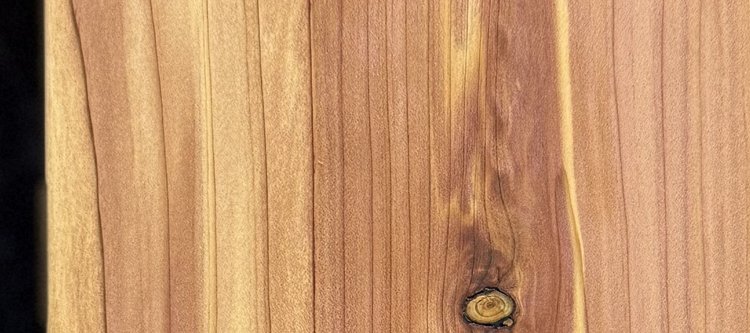
What you see.
Heartwood is a vibrant reddish purple to violet-brown fresh off the saw. Mellows with light to a warmer reddish brown. Narrow pale yellow-white sapwood, sharp contrast. Tight knots are common — most of what comes in is small-diameter.
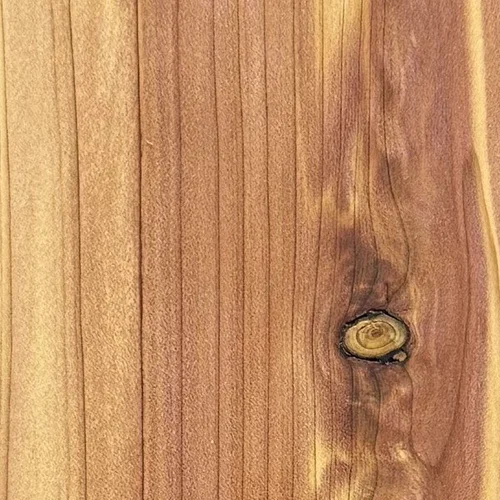
Heartwood, this specimen
How the grain runs.
Straight. Very fine, even texture. Lots of small knots. Part of the look, not a defect.
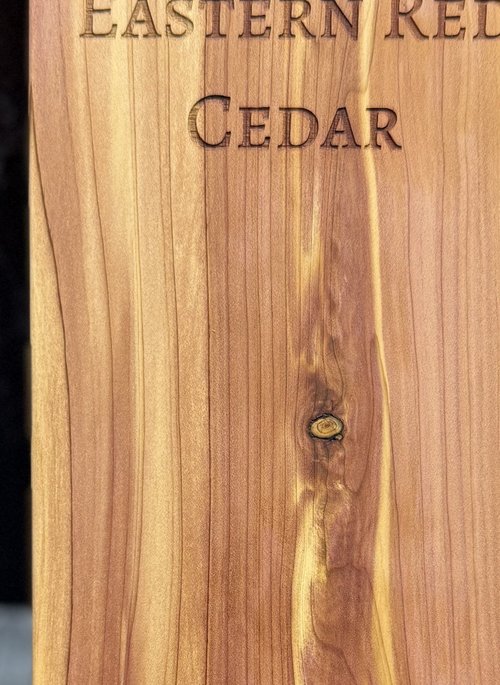
Closer in
On the bench.
Heartwood very durable. Stands up to fungus and to bugs — moths and termites both. One of the best decay-resistant softwoods east of the Rockies. Easy under hand and machine. Chips on routed edges and against the grain. Soft, a little brittle, but very stable once dry. Glues and finishes well — though the natural oils sometimes fight a film finish. Strong cedar smell. Lasts for years. That is why it lines closets and chests. Reported skin and respiratory irritation. Pollen drives cedar fever in the southeast and south-central states.
The numbers, looked at directly.
0lbf
4,000 N. Side-hardness — force to embed a half-inch steel ball halfway into the wood.
0lbs/ft³
530 kg/m³. At 12% MC.
0.44/ 0.47 at 12% MC
Basic over green volume; second number at 12% moisture content.
A side-hardness measurement. Higher number, harder wood.
On sourcing
Where this wood comes from matters.
Not on CITES. IUCN Least Concern. In much of the central plains it is treated as an invasive pest — harvest is unrestricted and often welcome. No supply problem.
What it's for.
- Cedar chests
- Closet linings
- Fence posts
- Turned items
- Carvings
- Bows
- Recorder mouthpieces
Worth knowing.
A juniper, technically. Not a true cedar. The name stuck. Stability, durability, and the smell — no other domestic softwood has all three.
Sources & references.
- Wood Handbook — Wood as an Engineering Material (FPL-GTR-282) (2021)
- Eastern Redcedar (Juniperus virginiana) — FPL Tech Sheet
- Silvics of North America: Juniperus virginiana L. — Eastern Redcedar (1990)
- Juniperus virginiana — IUCN Red List of Threatened Species (2013)
- Juniperus virginiana
- Eastern Redcedar (Juniperus virginiana)