

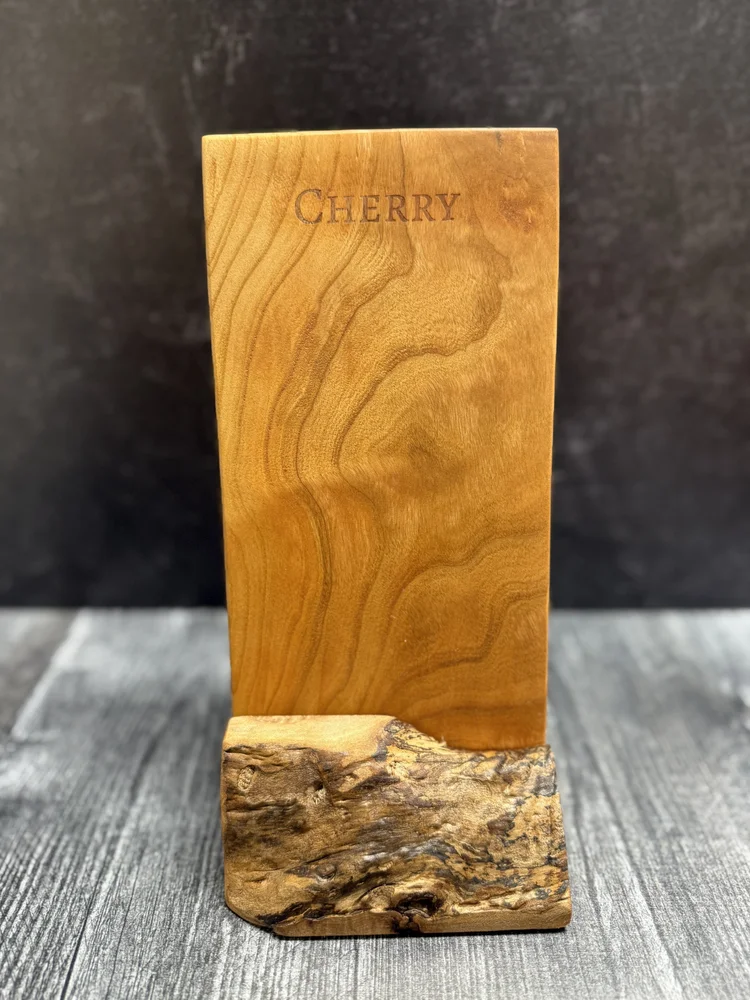
Cherry
Pinkish blonde off the saw. Dark rosewood by next year.
Prunus serotina Black Cherry (American) · Black Cherry (American) · Eastern North America
Eastern North America.
Cherry photo-darkens. Pinkish brown off the saw.
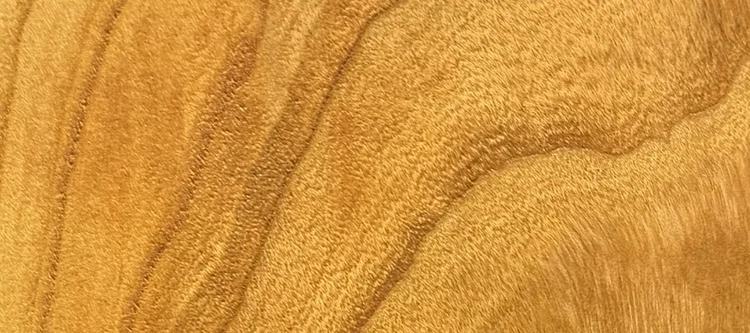
What you see.
Pinkish brown off the saw. Light and UV pull it darker over months. A year in, it is the warm reddish brown people know. Sapwood is a narrow pale yellow-white. Gum pockets and dark pith flecks come with the territory.
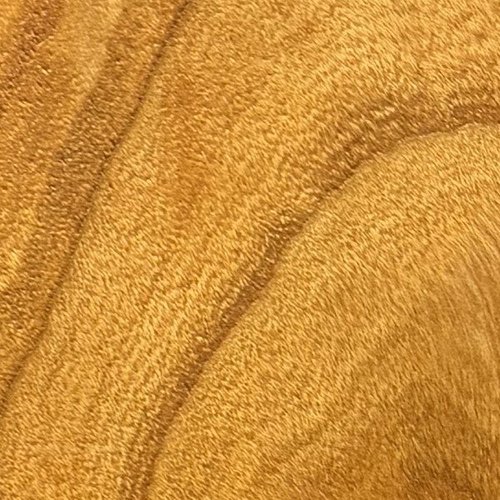
Heartwood, this specimen
How the grain runs.
Mostly straight. Curly and figured boards turn up. Fine, even texture. Good luster — a satin sheen under finish.
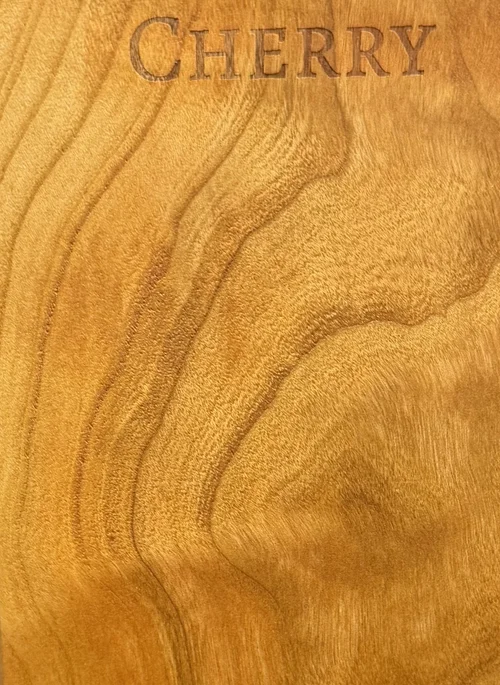
Closer in
On the bench.
Heartwood moderately durable to non-durable. Sapwood is fair game for bugs and fungus. Keep it inside. About as easy as a domestic hardwood gets. Planes, sands, turns, carves clean. Glues without trouble. Takes stain predictably — though most of the time you do not need to stain it. The color shows up on its own. Mild and faintly sweet at the cut. The wood is generally fine. Bark and foliage carry cyanogenic glycosides — that is a tree problem, not a lumber problem. Standard dust precautions.
The numbers, looked at directly.
0lbf
4,230 N. Side-hardness — force to embed a half-inch steel ball halfway into the wood.
0lbs/ft³
560 kg/m³. At 12% MC.
0.47/ 0.50 at 12% MC
Basic over green volume; second number at 12% moisture content.
A side-hardness measurement. Higher number, harder wood.
On sourcing
Where this wood comes from matters.
Not on CITES. IUCN Least Concern. Pennsylvania Allegheny cherry is one of the better-managed hardwood resources on the continent. Growth currently runs ahead of harvest.
What it's for.
- Fine furniture
- Cabinetry
- Architectural millwork
- Paneling
- Instrument bodies
- Turned objects
- High-grade veneer
Worth knowing.
Cherry photo-darkens. A board can look almost blonde the day you mill it and end up rosewood-deep a year later. If half a piece sits in sunlight and half does not, you will see it. Plan for the drift. Pennsylvania Allegheny stock is the benchmark.
Sources & references.
- Wood Handbook — Wood as an Engineering Material (FPL-GTR-282) (2021)
- Black Cherry (Prunus serotina) — FPL Tech Sheet
- Silvics of North America: Prunus serotina Ehrh. — Black Cherry (1990)
- Prunus serotina — IUCN Red List of Threatened Species (2019)
- Prunus serotina
- Black Cherry (Prunus serotina)
- American Cherry — Species Guide